


 Language: English











Solutions
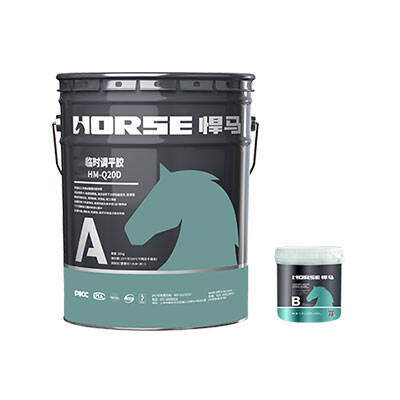
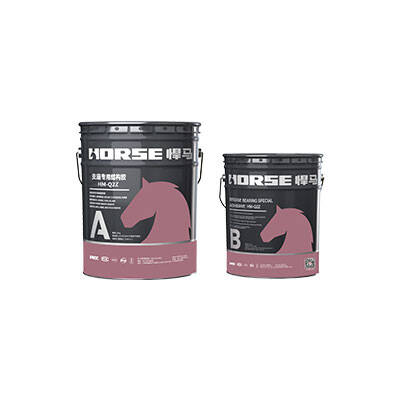
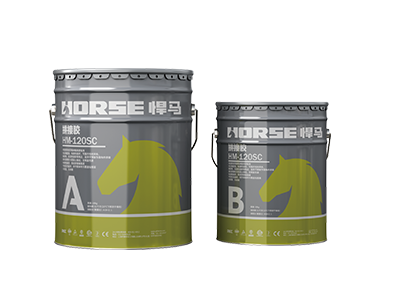
Horse Construction offers full range of structural strengthening materials with technical supports, documentation supports, products supports, project supports.
Slab with Openings Strengthened with CFRP Carbon Fiber
In building renovation, functional upgrading, equipment installation and structural reconstruction projects, removing partial slab sections to create openings (such as elevator shafts, ventilation openings, pipe passages, stairway modifications, and indoor space optimization) is a common structural modification measure. However, slab opening will directly cut off the original stressed steel bars, reduce the effective bearing area and structural stiffness, and cause stress concentration at the opening corners, which will seriously affect the safety and stability of the floor slab.

Carbon Fiber Reinforced Polymer (CFRP) strengthening has become one of the most widely used post-strengthening methods for slab openings due to its advantages of high tensile strength, light weight, corrosion resistance, convenient construction and no increase in structural self-weight.
When is CFRP Strengthening Effective for Slab Openings?
1 Small to Medium-Sized Openings with Minor Structural Damage
CFRP strengthening is highly effective when the opening size is controlled within a reasonable range: generally, rectangular openings with side length ≤ 1000mm, circular openings with diameter ≤ 1000mm, and the number of cut-off stressed steel bars ≤ 20% of the original steel bars in the stress direction. This type of opening is mostly used for pipe installation, small ventilation openings and local space transformation, with little damage to the overall stress of the slab, and CFRP can fully compensate for the lost tensile strength through its high-performance characteristics.
2 Openings in Normal Stress Zones (Mid-Span of Simply Supported Slabs, Positive Moment Zones)
For openings located in the positive moment zone of the slab (mid-span area, where the slab bears downward load and the bottom is in tension), CFRP pasted on the slab bottom can directly bear the tensile force, effectively make up for the lack of steel bars, control the development of concrete cracks, and reduce the deflection deformation of the slab. For continuous slabs, CFRP can also achieve ideal effect in the negative moment zone through double-sided pasting (slab bottom and slab top) and U-shaped hoop anchoring.
3 Slabs with Good Original Concrete Quality
When the original slab concrete strength is ≥ C20, no large-area hollowing, peeling, severe carbonization or corrosion damage, and the base surface can form a reliable bond with epoxy resin adhesive, CFRP can work synergistically with the concrete. The bond strength between CFRP and concrete meets the specification requirement (≥ 2.5MPa), ensuring the effective transmission of stress and giving full play to the strengthening performance.
4 Scenarios Requiring Lightweight and Non-Destructive Strengthening
For renovation projects of old buildings, high-rise buildings, or projects with strict limits on structural self-weight and clearance height, CFRP strengthening is the optimal choice. It does not increase the slab thickness and self-weight, avoids the wet construction of traditional methods, and does not affect the subsequent decoration and use functions, with obvious comprehensive benefits.

When is CFRP Strengthening Invalid for Slab Openings?
1 Over-Sized Openings with Severe Structural Damage
When the opening size exceeds 1000mm×1000mm, the number of cut-off steel bars exceeds 20% of the original steel bars, or the opening is located at the slab support, beam-slab joint and other key stress parts, the structural stiffness and bearing capacity loss are too large. CFRP can only provide tensile strength and cannot compensate for the huge loss of structural stiffness and shear resistance. At this time, CFRP strengthening alone is invalid, and section enlargement method, steel beam support or cast-in-place concrete edge beam strengthening must be adopted.
2 Severely Damaged Original Slab Concrete
If the original concrete has low strength (lower than C20), severe carbonization, large-area hollowing, steel bar corrosion expansion, or penetrating cracks, the concrete base surface cannot form an effective bond with CFRP. Even if CFRP is pasted, it will peel off from the base surface under stress, cannot participate in structural stress, and the strengthening effect is completely lost.
3 Openings with Severe Shear Force and Impact Load
CFRP has excellent tensile performance but poor shear resistance and impact resistance. For openings in areas with frequent heavy vehicle rolling, mechanical vibration or impact load, or where the slab needs to bear large concentrated shear force, CFRP cannot effectively resist shear deformation and impact damage, and the strengthening effect is extremely limited. It is not suitable for independent use and needs to be combined with other shear strengthening measures.
4 High-Temperature and Special Chemical Environment
Ordinary CFRP and epoxy resin adhesives have poor high-temperature resistance (long-term service temperature ≤ 60℃) and are easy to age in strong acid, alkali and oil corrosion environments. In such working conditions, the bond performance and mechanical properties of CFRP will decline rapidly, and the long-term strengthening effect cannot be guaranteed, so it is regarded as an invalid strengthening method.

Typical CFRP Strengthening Configurations for Slab Openings
Slab openings (e.g., for stairwells, elevators, pipelines, or ventilation shafts) disrupt the slab’s continuous stress path, leading to shear concentration at corners, flexural capacity loss around the opening perimeter, and increased risk of cracking under vertical or dynamic loads. CFRP strengthening configurations for slabs are optimized for planar stress characteristics, with adjustments to the wall-oriented schemes to match slab mechanics (bending, shear, and torsion resistance).
A. Shear & Diagonal Cracking Control (Most Common for Slabs)
This configuration targets the primary failure mode of slab openings: diagonal shear cracking at corners caused by concentrated shear forces. It is critical for slabs subjected to live loads, seismic forces, or post-construction opening cutting.
45° Diagonal X-pattern Strips
Layout: Paste CFRP strips diagonally across the four corners of the slab opening, forming an X-shape that aligns with the principal shear stress direction. For two-way slabs, apply X-pattern strips on both top and bottom surfaces of the slab.
Function: Redirects shear forces away from the opening corners, disperses stress concentration, and restrains the initiation and propagation of diagonal cracks.
Technical Notes:
Strip width: 150–300 mm (adjust based on slab thickness and load level).
For thick slabs (≥200 mm), use multi-layer strips with 50–100 mm spacing between layers.
Extend strip ends ≥300 mm beyond the opening edge into the intact slab area to ensure effective load transfer.
Perimeter Closed Strips (Bidirectional)
Layout: Paste continuous CFRP strips along the entire perimeter of the opening, forming a closed rectangular or circular frame. For reinforced concrete slabs, install strips on both top and bottom faces; for precast slabs, prioritize the tension face (typically the bottom).
Function: Enhances the local stiffness of the opening perimeter, prevents the separation of the opening from the main slab, and improves the slab’s resistance to torsion and bending deformation.
Technical Notes:
Use unidirectional CFRP strips (fiber direction parallel to the strip length) for optimal tensile performance.
Overlap strip ends by ≥200 mm at corners to maintain the continuity of the closed frame; avoid overlapping at the same corner for multi-layer configurations.
U-wraps (Slab Edge Confinement, for Edge Openings)
Layout: For openings located near the slab edge (distance ≤ slab thickness), wrap CFRP sheets around the slab edge to form a U-shape, overlapping with the perimeter strips of the opening.
Function: Provides lateral confinement to the slab edge, prevents edge spalling under load, and reinforces the connection between the opening perimeter and the slab edge.
Technical Notes:
U-wrap overlap length: ≥250 mm on the slab top and bottom faces.
Use mechanical anchors at wrap ends for slabs in high-seismic zones.
B. Flexural & Bearing Capacity Upgrade
This configuration addresses flexural strength loss caused by large slab openings (opening area >15% of the slab’s total area) or slabs under heavy loads (e.g., industrial floors, parking garages). It compensates for the reduced effective cross-sectional area of the slab.
Bidirectional CFRP Strips (Tension Face Reinforcement)
Layout: Paste orthogonal CFRP strips (longitudinal and transverse) on the tension face (bottom) of the slab around the opening. Extend strips ≥500 mm beyond the opening perimeter to overlap with the intact slab’s reinforcement.
Function: Acts as external tensile reinforcement, compensating for the loss of internal steel bars due to the opening, and improves the slab’s flexural capacity to resist sagging deformation.
Technical Notes:
Fiber direction of strips must align with the slab’s main bending direction (longitudinal for one-way slabs, bidirectional for two-way slabs).
For slabs with large openings, combine with perimeter strips to form a "frame + reinforcement" system.
CFRP Sheets for Large Openings or Heavy Damage
Layout: Cover the entire tension face (bottom) of the slab around the opening with CFRP sheets, extending ≥600 mm beyond the opening edge. For severely damaged slabs (e.g., with through cracks around the opening), apply sheets on both top and bottom faces.
Function: Maximizes the utilization of CFRP’s high tensile strength, improves the slab’s overall flexural, shear, and fatigue resistance, and repairs large-area damage.
Technical Notes:
Use bidirectional CFRP sheets for two-way slabs to resist bending in both directions.
Ensure full resin impregnation of sheets to avoid air bubbles; roll sheets firmly during installation to achieve 100% bonding with the slab surface.
C. Anchorage & Debonding Prevention (Critical for Slabs)
Debonding is the most common premature failure mode for CFRP-strengthened slabs, especially under cyclic loads. This configuration ensures CFRP strips/sheets can fully exert their tensile strength by enhancing anchoring reliability.
Fan-type Anchors at Strip Ends
Layout: Expand the end of CFRP strips (especially diagonal and flexural strips) into a fan shape (width increased to 2–3 times the original strip width) and paste them on the intact slab area, away from the opening stress zone.
Function: Reduces stress concentration at strip ends, increases the bonding area, and prevents sudden peel-off under repeated loads.
Technical Notes:
Fan anchor length: ≥250 mm; ensure the fan area is free of cracks, oil, or loose concrete.
For slabs in seismic zones, combine fan anchors with mechanical fasteners for double protection.
Mechanical Fasteners (Bolts + Steel Plates) for High-stress Zones
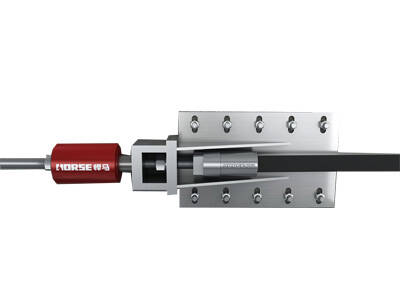
Layout: Install stainless steel bolts and pressing plates at the ends of CFRP strips or at 300–500 mm intervals along strip lengths. The steel plates should fully cover the CFRP strips and be tightly pressed against the slab surface.
Function: Combines bonding force with mechanical clamping force to resist peeling forces, making it suitable for slabs under heavy dynamic loads (e.g., factory floors, parking garages) or extreme environments (high humidity, temperature fluctuations).
Technical Notes:
Drill bolt holes before CFRP installation to avoid damaging carbon fibers.
Use anti-corrosion stainless steel bolts for outdoor or corrosive environments.
CFRP Overlapping at Corners & Joints (≥200 mm Overlap)
Layout: When connecting perimeter strips, diagonal strips, or sheets at opening corners, ensure an overlap length of ≥200 mm. Fully saturate the overlapping area with epoxy resin to eliminate voids.
Function: Ensures the continuity of the stress path at corners, avoids weak points at strip joints, and prevents debonding from joint positions.
Technical Notes:
Overlap direction should follow the stress direction of the slab.
Limit overlapping layers to ≤2 at the same position to avoid excessive thickness affecting surface flatness.
You can find anything here you are in need of, have a trust trying on these products, you will find the big difference after that.

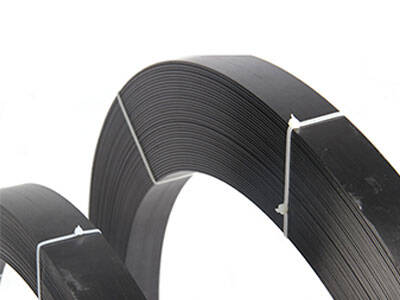
High strength carbon fiber reinforced polymer (CFRP) strip / laminate / plate for structural strengthening and concrete repair

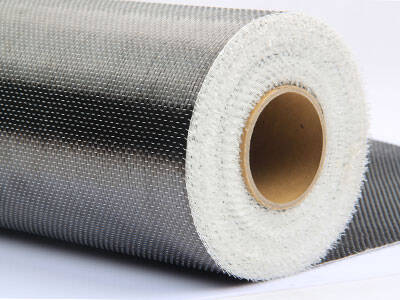
High strength, unidirectional carbon fiber fabric pre-saturated to form a carbon fiber reinforced polymer (CFRP) fabric used to strengthen structural concrete elements.

High strength, unidirectional carbon fiber sheet pre-saturated to form a carbon fiber reinforced polymer (CFRP) sheet used to strengthen structural concrete elements.
