


 Language: English











Solutions
Horse Construction offers full range of structural strengthening materials with technical supports, documentation supports, products supports, project supports.
Three Main Methods of Bridge Segment Jointing: Bonded Joint, Wet Joint and Dry Joint
The three main methods of bridge segment splicing—adhesive joints, wet joints, and dry joints—differ significantly in their structure, construction techniques, stress characteristics, and applicable scenarios. The following is a detailed comparison and explanation of these three methods:

1. Adhesive Joint
Core Material: Epoxy resin adhesive.
Construction Process: Apply epoxy resin adhesive to the end face of the precast segment, then use temporary prestress to tightly bond and compress adjacent segments, forming a whole after the adhesive cures.
Strength Characteristics: The adhesive layer is very thin (usually 1-2mm), with strong shear and compressive strength, but weak tensile strength. Epoxy resin adhesive effectively seals the joint, preventing moisture and chloride ion intrusion, and has good durability.
Applicable Scenarios: Mainly used for precast segmental bridges made of prestressed concrete (such as urban elevated bridges and high-speed railway bridges), and is currently the most mainstream segmental assembly method.
Advantages: Fast construction speed, smooth and dense joints, good structural integrity, and better durability than wet joints.
Disadvantages: Requires extremely high geometric accuracy of the precast segments; epoxy resin adhesive is sensitive to temperature and humidity, and the construction window is relatively short.
2. Wet Joint
Core Material: Cast-in-place concrete (usually micro-expansion concrete or high-performance concrete).
Construction Process: A gap of a certain width (usually 30-80cm) is left between adjacent precast segments. After tying the connecting reinforcement, formwork is erected and concrete is poured. The temporary restraints are released after the concrete reaches the design strength.
Structural Characteristics: The wet joint forms a rigid connection with the precast segment through reinforcement and post-poured concrete, resulting in the strongest integrity, equivalent to a continuous structure. However, micro-cracks are prone to occur at the joint due to differences in shrinkage and creep.
Applicable Scenarios: Used when the structural integrity requirements are extremely high, or when the geometric precision control of the segments is insufficient; also commonly used for the connection parts of mixed cast-in-place and precast structures.
Advantages: High tolerance (reinforcement position and joint width can be adjusted), good structural integrity and fatigue resistance; no need for high-precision precast formwork.
Disadvantages: Requires on-site formwork, reinforcement tying, pouring, and curing, resulting in a long construction period; susceptible to shrinkage and creep, prone to interface cracks; sensitive to weather, construction is difficult in winter or rainy seasons.
3. Dry Joint
Core Material: No filler material (or only lubricant and sealant).
Construction Process: Precast segment faces are in direct contact (usually with shear keys). Permanent prestress is applied to compress the segments, and shear force is transferred through contact surface friction and the shear keys.
Stress Characteristics: There is no adhesive force at the joint; contact is maintained entirely by prestress. Under repeated loading, the joint may slightly open, but the prestressing tendons ensure the overall structure does not separate. Shear resistance depends on normal compressive force and the shear keys.
Applicable Scenarios: Commonly used in early segmental bridge construction; now mainly used for temporary structures, secondary bridges, or projects with extremely tight schedules. It is still used in the side spans or approach bridges of some long-span bridges.
Advantages: Fastest construction (no need to wait for colloid curing or concrete curing); segments can bear load immediately; relatively easy disassembly (suitable for movable or temporary bridges).
Disadvantages: joints are prone to water leakage, and steel bars are prone to corrosion; fretting wear may occur under long-term loads, leading to prestress loss; it has the worst durability and fatigue resistance, making it unsuitable for high seismic zones or heavy-haul railways.
| Parameter | Epoxy Joint (Glued Joint) | Wet Joint (Cast-in-Place Joint) | Dry Joint |
|---|---|---|---|
| Filler/Bonding Material | Epoxy resin adhesive | Cast-in-place concrete (often micro-expansive or HPC) | None (or only sealant/lubricant) |
| Joint Thickness | 1 – 2 mm | 300 – 800 mm | 0 (direct contact) |
| Force Transfer Mechanism | Adhesive bonding + post-tensioning | Continuous steel reinforcement + monolithic concrete connection | Friction + shear keys + permanent prestressing |
| Construction Speed | Fast (curing time: several hours) | Slow (curing time: 3–7 days) | Fastest (immediate load transfer after stressing) |
| Structural Integrity | Good | Best (fully monolithic) | Fair (depends on prestress level) |
| Durability | Excellent (water/chloride‑tight seal) | Good (but prone to shrinkage cracks at interface) | Poor (prone to water leakage and corrosion) |
| Required Precision for Segments | HIgh | Low | High |
| Typical Applications | Modern precast segmental bridges (urban viaducts, high‑speed rail) | Hybrid cast/precast structures, geometrically complex bridges | Early segmental bridges, temporary/military bridges, quick‑erection structures |
Summary Notes (for clarity)
Epoxy joint is the most common choice for permanent precast segmental bridges, offering a balance of speed, durability, and structural performance.
Wet joint is used when geometric control is less precise or when maximum continuity is required (e.g., at piers or in curved alignments).
Dry joint is now rarely used for permanent bridges due to long‑term durability concerns, but it remains useful for temporary or demountable structures.
Contact Us
You can find anything here you are in need of, have a trust trying on these products, you will find the big difference after that.

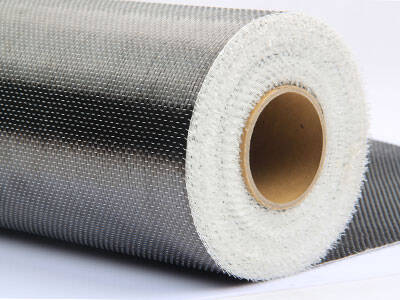
High strength, unidirectional carbon fiber wrap pre-saturated to form a carbon fiber reinforced polymer (CFRP) wrap used to strengthen structural concrete elements.

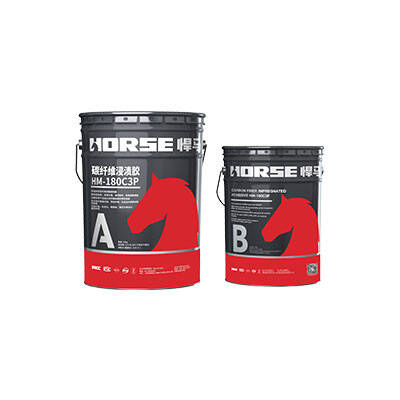
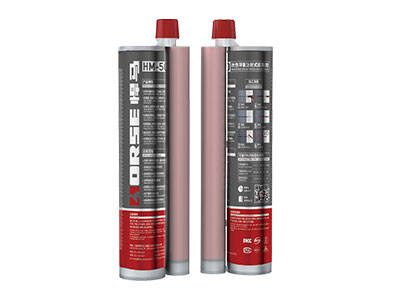
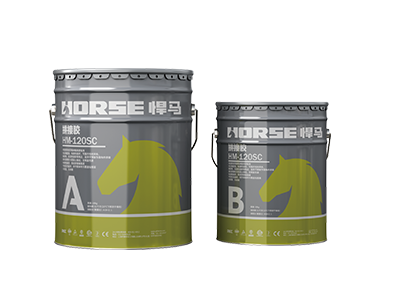
HM-120SC Segmental Bridge Adhesive is a solvent free, two-component, high modulus, moisture-insensitive epoxy adhesive specifically developed for use as an adhesive for precast segmental bridge elements.

Element bonding adhesives provide a rigid bond between elements to transfer load
