Which Countries Excel in Carbon Fiber Construction Repair?
Media News
Here is the most timely,accurate and authoritative information platform of HORSE CONSTRUCTION. We are based on our own development, whether it is the HORSE CONSTRUCTION hot spots or technological innovation,we will present for you in the first time...
Which Countries Excel in Carbon Fiber Construction Repair?
2026-07-02 14:38:52
Summary: When evaluated across five dimensions—the materials industry chain, standardization systems, scale of engineering application, depth of R&D, and policy drivers—the leaders with the most mature development and greatest overall strength are Japan, the United States, and Germany (the EU).
When evaluated across five dimensions—the materials industry chain, standardization systems, scale of engineering application, depth of R&D, and policy drivers—the leaders with the most mature development and greatest overall strength are Japan, the United States, and Germany (the EU). China stands out as the world's largest application market and the leader in production capacity, boasting the fastest growth rate globally. France, Switzerland, and Australia serve as regional benchmarks.
I. Japan — The Birthplace of Global Carbon Fiber Reinforcement Technology and the Benchmark for Seismic Retrofitting
Technological Leadership: Pioneering CFRP Reinforcement Systems for Construction
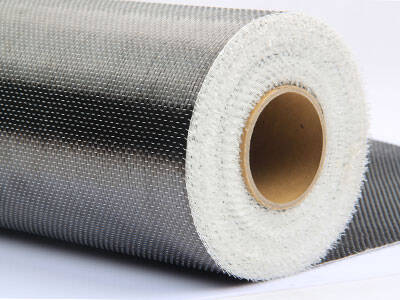
In the 1970s, Japan pioneered the use of carbon fiber fabric for the seismic wrapping and reinforcement of concrete columns, establishing a comprehensive engineering process by the 1980s. Companies like Toray, Teijin, and Mitsubishi Chemical dominated the market for high-end construction-grade carbon fiber precursor and prepreg, offering world-class material performance and batch-to-batch consistency. Major construction groups—such as Taisei, Obayashi, and Kajima—developed integrated construction technologies; innovations such as bidirectional carbon fabric, prestressed CFRP plates, and specialized tunnel reinforcement methods all originated in Japan.
Strong Demand Driven by Seismic Activity and Mandatory Retrofitting Policies
As a country prone to earthquakes, Japan enforces seismic retrofitting for buildings, bridges, and tunnels through legislation. Regular inspections and reinforcements of aging school buildings, elevated structures, and subway tunnels generate massive, stable, and sustained market demand. Tens of thousands of buildings and over a thousand bridges undergo CFRP reinforcement annually, maintaining the world's highest market penetration rate.
The World's First Comprehensive Standards
Japan issued the world's first code for CFRP reinforcement of concrete structures in 1990, establishing a closed-loop standard system covering materials, design, construction, inspection, and service-life assessment. Long-term collaborative research between universities and enterprises on durability, fatigue, and debonding mechanisms has resulted in the world's most comprehensive database.
A Fully Domestic, Closed-Loop Industrial Chain
The entire supply chain—from precursor fibers and carbon fabrics/plates to compatible epoxy adhesives, specialized construction equipment, and testing instruments—is domestically produced. Upstream and downstream sectors collaborate on R&D to ensure materials are tailored to construction conditions, offering a complete range of products designed for specific environments such as high humidity, low temperatures, and confined tunnel spaces.
II. United States — Largest Scale of Infrastructure Reinforcement and Globally Adopted Standards
Massive Aging Infrastructure Drives the Repair Market
Over 40% of bridges across the U.S. exhibit structural defects, alongside widespread issues such as salt-corroded concrete in coastal areas, aging highways, wharves, and dams. The Federal Highway Administration (FHWA) has allocated substantial funds for refurbishment; corrosion-resistant and lightweight CFRP has become the mainstream alternative to bonded steel, and CFRP seismic retrofitting is widely implemented in California's earthquake zones. A flagship project is the comprehensive CFRP reinforcement of the San Francisco–Oakland Bay Bridge, which serves as a global model.
Authoritative and Universally Adopted Industry Standard: ACI 440
The American Concrete Institute’s ACI 440 standard serves as the core reference for countries worldwide in developing their own reinforcement codes. It standardizes material specifications, calculations for flexure, shear, and seismic performance, debonding control, and durability design. State departments of transportation mandate adherence to this standard for bridge reinforcement, ensuring a high level of standardization in project execution.
Comprehensive Support from the High-End Composite Materials Industry
Companies such as Hexcel, Solvay, and Zoltek supply industrial-grade, low-cost large-tow carbon fibers, while Owens Corning and BASF North America provide specialized adhesives for construction. A mature industrial ecosystem has formed, comprising numerous professional reinforcement engineering firms and third-party testing agencies.
Diverse Applications Across Multiple Scenarios
Beyond buildings and bridges, CFRP is extensively used in the repair and reinforcement of storage tanks, offshore platforms, wind turbine towers, nuclear facilities, and historical landmarks. A wide range of products—including prestressed carbon fiber plates, FRP rebar, and FRP grids—are being promoted concurrently.
III. Germany (EU Core) – European Leader in Green Durability and Industrialized Reinforcement
Driven by a Dual Approach: EU Policy and Aging Building Renovation
The EU's "Green Building Directive" encourages low-carbon, long-lasting renovation; compared to demolition and reconstruction, CFRP reinforcement significantly reduces carbon emissions. With a vast stock of post-war reinforced concrete buildings, railway bridges, and industrial facilities entering the maintenance phase, the German government subsidizes structural durability upgrades, resulting in over 2,000 CFRP reinforcement projects annually.
Rigorous Unified European Standards (fib, Eurocode)
The International Federation for Structural Concrete (fib) has issued general guidelines for FRP reinforcement, while the unified European structural design code (Eurocode) includes specific provisions for CFRP calculations. German federal transport and construction authorities have established detailed regulations covering construction acceptance, fire safety, and long-term creep control, imposing strict requirements on the weather resistance and freeze-thaw durability of bonding materials.
Deep-Rooted Expertise in the Composite Materials Industry
Companies like SGL and BASF offer comprehensive product lines—including carbon fabrics, epoxy resins, and prestressed CFRP systems—specifically designed for construction. They excel in rapid, mechanized reinforcement methods, utilizing automated bonding equipment and factory-produced carbon plates to ensure high construction efficiency and consistent quality.
Emphasis on Life-Cycle Costs and Environmental Recycling
Europe pioneered research into carbon fiber composite recycling technologies. Evaluation systems for reinforcement solutions balance initial costs, service life, and maintenance expenses, with government tenders prioritizing lightweight, corrosion-resistant CFRP solutions.
IV. China — World’s Largest Production Capacity, Fastest Growth Rate, and Largest Scale of Infrastructure Application
World-Leading Carbon Fiber Capacity and Cost Reduction through Localization
By 2025, China is projected to account for 52.5% of global carbon fiber production capacity. Domestic manufacturers such as Zhongfu Shenying and Hengshen have achieved full import substitution for carbon fiber fabrics and plates used in construction; significantly reduced material costs are driving the widespread adoption of structural reinforcement.
Massive Demand for Infrastructure Repair and Retrofitting
There is a continuous need for the reinforcement of hundreds of thousands of bridges, vast numbers of high-rise residential buildings, hydraulic tunnels, aging industrial facilities, and municipal utility networks. Mandatory seismic retrofitting for school buildings and hospitals in earthquake-prone regions (such as Sichuan-Yunnan and Northwest China) is fueling the world's fastest market growth (annual growth rate exceeding 14%).
Comprehensive and Independent Technical Standards System
China has issued the *Technical Specification for Strengthening Concrete Structures with Carbon Fiber Reinforced Polymer (CFRP)*, supported by specialized standards for the highway, water conservancy, and railway sectors. Leading institutions—including Tsinghua University, Tongji University, and Southeast University—conduct long-term experimental research and have independently developed technologies such as prestressed carbon plates, carbon grids, and specialized systems for underwater reinforcement.
V. Brief Overview of Other Leading Nations
Switzerland and France: Benchmarks for high-end structural reinforcement in Europe, excelling in the restoration of historic buildings and landmark bridges. They lead in technologies such as prestressed CFRP and ultra-low-temperature durability; Sika, headquartered in Switzerland, is the global leader in structural reinforcement adhesives.
Australia: A global model for addressing salt-induced corrosion in coastal environments. The country has established comprehensive standards for FRP bridge applications, and carbon fiber reinforcement is the preferred choice for concrete structures in wharves and coastal areas.
In light of these figures, the takeaway for Horse Construction is clear: while products serve as the entry ticket, standards and data constitute the long-term "moat." This mirrors the path taken by industry leader Sika over the past four decades and aligns with our own strategic direction. Although we currently rank first in export sales among Chinese structural reinforcement material brands, we still need to step up our efforts in the international market to break into the top three globally.


 Language: English